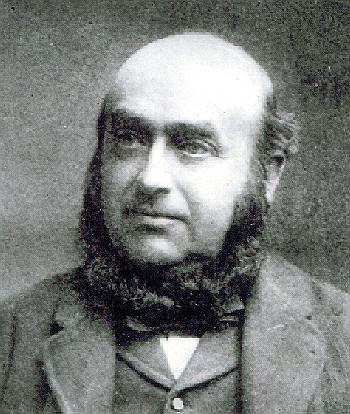
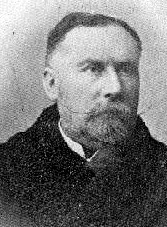
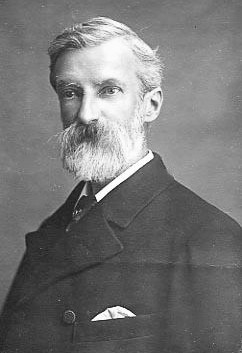
Oger the Breton (c 1086) was undoubtedly the biggest landowner in
the history of Bourne. He was a Frenchman, also known as Ogerus Briton,
who came to Britain with the invading army of William the Conqueror in
1066 and was rewarded for his loyalty with holdings dispossessed from the
English. When the Domesday Book was published in 1086 giving the results
of the new king's great land survey, he had a total of 19 entries, all in
the Bourne area and so the indications are that he was a very important
Norman knight. His home was most likely a manor house alongside St Peter's
Pool, now occupied by the Wellhead Gardens, a site popularly believed to
be that of a castle although the solid stone foundations that have been
discovered would also fit the proportions of a moated and fortified manor
house which is a far more likely explanation.
Orm the Preacher (c 1180) also worked at Bourne Abbey a century
earlier than Robert Manning but his presence here has only been revealed
during recent research. His homily collection known as The Ormulum has
been well known to linguists and language historians ever since the 17th
century but its source has only recently been established as Bourne Abbey.
Orm's language provides a glimpse of the English vernacular of the time
and before it was strongly influenced by the French. It is assumed that
the manuscript remained at Bourne Abbey until the dissolution of the
monasteries between 1536 and 1540 and after various owners, is now in the
Bodleian Library at Oxford University.
Robert Manning (1264-1340) is perhaps the most notable of all our
citizens in that he is credited with putting the speech of the ordinary
people of his time into the recognisable form that we have today. He is
best known as Robert de Brunne because of his long time residence as a
canon at Bourne Abbey where he completed his life's work and in the
process, popularised religious and historical material in a Middle English
dialect that was easily understood by the people of his time. His best
known work was Handlyng Synne, a book of great value because it gives
glimpses into the ways and thoughts of our countrymen 600 years ago and
even more, shows us the language then in common use.
William Cecil (1520-1598) became the first Lord Burghley after
serving Queen Elizabeth I for forty years, during which time he was the
main architect of Britain's successful policies of that period, earning a
reputation as a master of renaissance statecraft with outstanding talents
as a diplomat, politician and administrator. He was born at a house in the
town centre at Bourne that is now the Burghley Arms and a plaque on the
outside reminds us of this event.
Job Hartop (1550-1595) worked as a farmer's boy on the land near
Bourne but hankered after a life of adventure and ran away to sea when he
was 12 years old. After a short apprenticeship with a gunpowder
manufacturer in London, he signed on with the English admiral Sir John
Hawkins and sailed the Spanish Main in the company of the young Francis
Drake. He was captured by the Spanish on his third voyage and spent ten
years as a galley slave and thirteen years in a Spanish prison but escaped
and made his way back to Bourne where he spent his final days recounting
his adventures in the town's taverns, although the privations he suffered
had taken their toll and he died at the age of 45.
John Jackson (1585-1612) was
Vicar of Bourne at a time when there were many recusants, that is
clergymen unwilling to conform to the doctrine and practices of the Church
of England. He was one of 18 in the Diocese of Lincoln who caused trouble
because of their non-conformist tendencies by refusing to wear a surplice
or observe certain ceremonies during services such as giving the sign of
the cross and failing to follow the Book of Common Prayer. He was
suspended from the church in 1611 but was already seriously ill and died
the following year.
Jeremiah Ives (1692-1741) originated in Bourne but his family moved
to Norfolk when he was still young. In 1726, he became Sheriff of Norwich
and was elected mayor in 1733. He kept two homes during this period, one
at Norwich and another at Bourne, and travelled between the two. Ives
married Alice Black of Norwich in 1714 and had a son, also called
Jeremiah, who was born here circa 1729 and also became a mayor of Norwich.
Dr William Dodd (1729-1777) was an Anglican clergyman, a man of
letters and a forger. He was also the son of the Rev William Dodd who was
Vicar of Bourne from 1727-56, graduating with distinction from Clare
College, Cambridge, and then moved to London where his extravagant
lifestyle soon landed him in debt and worried his friends who persuaded
him to mend his ways. He decided to take holy orders and was ordained in
1751, becoming a popular and fashionable preacher but was always short of
money and in an attempt to rectify his depleted finances, forged a bond in
the sum of £4,200. He was found out, prosecuted and sentenced to death and
publicly hanged at Tyburn on 27th June 1777.
Bryan Browning (1773-1856), the architect, is best remembered for
his design of Bourne Town Hall, built in 1821 by public subscription and
still in use today. He was also responsible for the House of Correction at
Folkingham and the workhouses at Bourne, Stamford and Spalding. Browning
was a dedicated villager whose family made their mark on Thurlby over a
period of two centuries and several members are buried in the churchyard.
William Bampton
(1787-1830) knew his calling from an early age and joined the Baptist
Church when he was only thirteen, deciding that he would dedicate his life
to the ministry but chose to become a missionary and in 1820, his offer to
serve in India was accepted. "This afternoon, I have solemnly devoted
myself to the service of God among the heathen", he wrote in his diary. He
took instruction in medicine and surgery, vital training for the
missionaries of the time, was married and ordained, and sailed for Bombay
in 1822. Once in India, he learned the language, went into the bazaars,
dressed in Indian costume and spoke to the people, telling them the story
of Christianity, of the life and work of Jesus and of the message of God's
love for each one of them. But his mission did not last long. The hard
work and unhealthy conditions took their toll and he died in 1830 but is
remembered by Baptists today for his missionary zeal and is ranked with
the foremost Christian philanthropists.
Joseph Dodsworth (1797-1877) ministered to the parish of Bourne as
curate and then vicar for 55 years and was instrumental in bringing the
railway to the town in the mid-19th century, being one of the sponsors of
the newly formed company to build the track to connect with the main line
at Essendine in 1860. He was also one of the original investors in the
town’s gasworks and a supporter of popular education, regularly organising
winter evening sessions of penny readings for the public. During his time
as vicar, he was also generous in his personal gifts to the church,
donating the stone and marble reredos in 1866 while the east window of
stained glass commemorates members of his family and the centre panel was
installed in his memory.
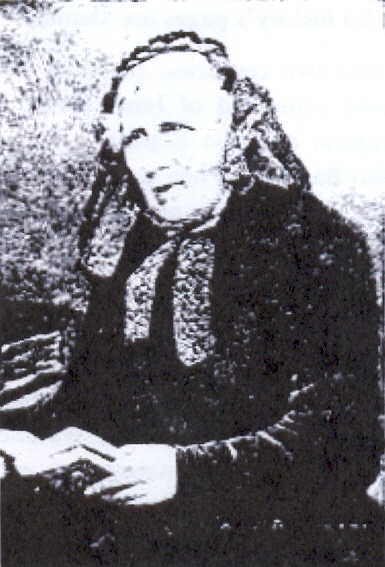
Jane Redmile (1800-1883) was
the daughter of a yeoman farmer from Dyke whose unyielding faith, selfless
service and sense of charity singled her out as a special person in her
lifetime and her memory shines undimmed today as an example of the perfect
life, perhaps even one approaching the state of grace we have come to know
as saintliness. After a difficult childhood when she became breadwinner to
her five brothers and sisters, Jane spent her life in continual labour in
the cause of others while pursing her religious faith at the Baptist
Church in West Street, Bourne, founding chapels at Morton and Dyke and
opening a grocery shop in Eastgate to help the deprived, yet still finding
time for an intensive programme of self-education to improve her mind. In
her final years, when known in the town as Aunt Jane, she was frequently
sought out by young people wanting to speak with her and although far
removed by reason of age, she felt sufficiently young in heart to be one
of them.
John Lely Ostler (1811-1859) was born into a distinguished family
at Grantham who claimed the celebrated 17th century Dutch artist Sir Peter
Lely as an ancestor. He did not move to Bourne until a few years before
his early death at the age of 48 but in that time, he became one of the
biggest land and property owners in the district, supporting charitable
causes, including schools. Such was his reputation that an elaborate
monument was erected in the market place in his memory although it has
since been moved to the town cemetery.
Robert Mason Mills (1819-1904) realised the market potential of the
fresh water supply that was freely available beneath Bourne and was soon
extracting it from underground springs and selling it throughout the
world. His aerated water business became part of the town's prosperity
during the 19th century, giving employment to many and earning his
business a Royal Warrant for supplying Queen Victoria's son, the Duke of
Connaught, who bought it for its supposed medicinal and health giving
qualities.
Charles Worth (1825-1895) was born in this town, the son of a local
solicitor who lived at Wake House in North Street which survives today as
a community centre. He left Bourne when still a boy to seek his fortune in
Paris where he became an internationally known designer of women's fashion
and the founder of haute couture. His reputation became such that the
French government awarded him the Legion of Honour and when he died, 2,000
people, including the President of the Republic, attended his funeral.
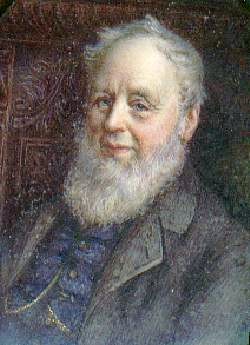
William Wherry (1841-1915) was one of the most unselfish men to
serve this town. He thought so much of his fellow man that he continually
tried to make life better and this burden that he took upon himself might
well have hastened his end. He was forced to retire from public life
because of ill health at the age of 74 when his numerous offices and
positions of responsibility numbered almost 100. If Bourne needs an
example of a man of stature, then he is the one.
John Thomas Swift (1855-1939) is only remembered today by his book
about the town and locality, Bourne and People associated with Bourne,
published in 1909, but few copies survive outside the reference sections
of our public libraries and recent research has superseded much of what he
wrote. He was active in local affairs, sitting as a magistrate and serving
as a member of Bourne Urban District Council, being elected chairman in
1908-09, and was subsequently elected to Kesteven County Council, now
replaced by Lincolnshire County Council, and he later became an alderman.
Swift was also responsible for the first detailed research into the list
of past abbots and vicars of Bourne from the 12th century which is still
accepted today and during his lifetime was frequently called upon to
adjudicate on disputes and discussions involving the history of the town.
Robert A Gardner (1850-1926) was a bank manager in Bourne and also
a talented artist whose work was exhibited in the Royal Academy. He never
aspired to public office but his interest in the community inevitably
resulted in a number of appointments, notably as a magistrate and chairman
of the Bourne bench. But he is best remembered for his paintings and many
of his works survive to this day, mostly in private ownership although
some can be found hanging in the Red Hall.
Joseph James Davies (1856-1920) was one of the great schoolteachers
in the history of Bourne who steered the former Abbey Primary School
through its formative years. He was headmaster for 33 years during a
period of changing social conditions, a pupil roll often in excess of 500
boys and girls and many of them coming from deprived backgrounds. He was
appointed headmaster of the original Boys' Council or Board School in 1887
and during the next three decades, 2,000 boys came under his influence and
tuition and in later years he kept in touch with many, notably those who
served in the Great War, keeping up a regular correspondence until they
returned home. Local history was a hobby which led to his book Historic
Bourne being published in 1909, a natural adjunct to his freelance
journalism, being the correspondent for most of the newspapers that
circulated in Bourne and a frequent contributor to many London
publications.
William Henry Redshaw
(1856-1943) was brought up in the family's saddlery trade but preferred
photography and in 1874, at the age of 18, he set up his own business,
using his father's premises in North Street. Photography was still in its
infancy and regarded as little more than a passing phase, but his studio
was an immediate success. His work was mainly portrait photographs
although he also produced views of the town that were used as picture
postcards, many of which survive to this day to remind us of how much it
has changed. His other accomplishment was growing flowers and vegetables
and he spent hours in the garden of his home at No 41 George Street and
was a frequent prize-winner when he exhibited his produce at local shows.
Dr William John Gilpin (1864-1943) moved to Bourne in the late 19th
century to take over the practice at Brook Lodge in South Street and
became one of the first people in the town to own a car. During the Great
War of 1914-18, he was appointed commandant of the military hospital run
by the Red Cross which was established at the Vestry Hall in North Street
from November 1914 until December 1918 during which time 945 wounded
soldiers from the front line were cared for and he was awarded the MBE for
his services in conducting the unit in such an efficient manner. There
were fears for his health in 1917 when he contracted blood poisoning while
carrying out a post mortem examination and although he was seriously ill
for a time, he recovered and was back at work within weeks.
Cecil Walker Bell (1868-1947) was a member of an old established
legal firm that practised in Bourne for 150 years with offices at No 18
West Street. After qualifying as a solicitor, he took over the business
from his father and held many of the leading public legal posts, including
that of coroner for South Lincolnshire. He was a keen military man,
commanding the local Volunteers for many years and reaching the rank of
major, and was also active in the social and musical life of the town. Mr
Bell served as people’s warden at the Abbey Church but in 1933 he was
successfully sued for libel by the vicar, Canon John Grinter, and in 1940,
he left the town and retired to Eastbourne and never returned.
Thomas Whyment Atkinson (1874-1954) bequeathed property and
land which enabled the development of
the Wellhead park and War Memorial gardens, established in the years
following the Second World War of 1939-45. He spent more than half a century devoted to
farming and the community, as union officer and advisor, councillor and
justice of the peace, serving for 52 years on Bourne Urban District
Council, subsequently joining South Kesteven Rural District Council on its
formation. He was also a member of Kesteven County Council from 1910,
being elevated to the aldermancy in 1921, and in 1945, he became High
Sheriff of Lincolnshire, an appointment he regarded as not only an honour
for himself but also for Kesteven and the Bourne area particularly.
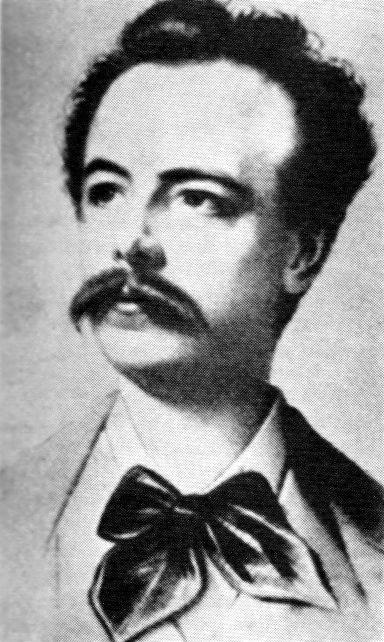
Frederic Manning (1882-1935) wrote what is considered to be one of
the finest novels dealing with the Great War of 1914-18 and much of this
work was completed while staying at the Bull Hotel in Bourne, now the
Burghley Arms, and he later went to lodge at a house in Burghley Street. Manning was an Australian who chose to live here after a
spell at Edenham where he stayed with the vicar, the Rev Arthur Galton,
who had been his tutor. His book, Her Privates We, was at first published
anonymously, to much critical acclaim, but eight years after his death, it
was published in 1943 under his own name and is still in print almost 70
years later. In the book, Manning acknowledged his affection for this town
by calling his hero Private Bourne.
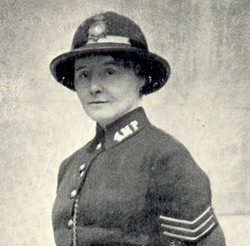
Lilian Wyles (1885-1975) was a major influence in the acceptance of
women into the police force. She was the only daughter of the Bourne
brewer, Joseph Wyles, and after a spell of duty on the streets of London
with the new women patrols to assist young girls at risk, was promoted
inspector in 1922, becoming the first woman officer of the Metropolitan
Police's CID department.
Charles Pask Matthews (1886-1956) became the first headmaster of
Bourne Grammar School when it was opened in 1920. The school originally
began with three other staff and 50 pupils, meeting first in the Vestry
Hall because the buildings were not ready for occupation, but in
subsequent years he was mainly responsible for its establishment as a
major educational force in the district, guiding it through the crucial
early days and eventually seeing it firmly established with a promising
future before he retired in 1945 after a quarter of a century. Mr Matthews
was also a skilled scientist and in 1940, while the Second World War was
in progress, he put his extensive knowledge at the disposal of Bourne
Urban District Council for the testing of meat affected by poison gas.
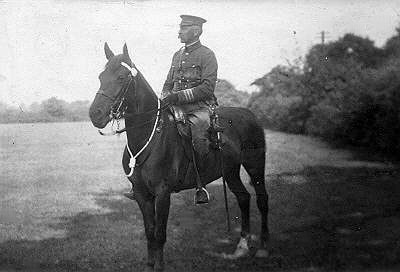
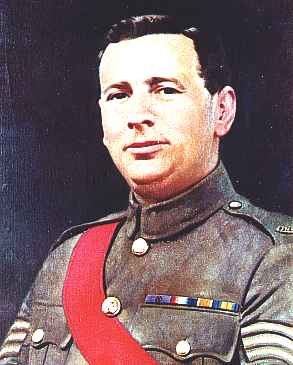
Charles Sharpe (1889-1963) was a farmer's boy from Pickworth, near
Bourne, who ran away from home and joined the army. During the Great War
of 1914-18, an act of conspicuous bravery earned him the Victoria Cross,
Britain's highest decoration for valour, and he subsequently inspired many
young men to enlist. He received his award from King George V at Windsor
Castle on 24th July 1915 and during that year he also visited Bourne to
speak at a public meeting in the Market Place rallying young men to
volunteer for military service. On return to civilian life, he had several
jobs, notably as a physical training instructor for boys at the Hereward
Camp approved school who regarded him as a role model, and on his death,
he was given a military funeral.
Horace Stanton (1897-1977), a
local solicitor, gave a lifetime of service to this town and it is to him
that we are indebted for the War Memorial and its gardens and the Abbey
Lawn. He also commanded the district's Home Guard detachment during the
Second World War. There were few aspects of life in the town that he did
not influence and the high esteem in which he was held was echoed at his
funeral service when the vicar, the Rev Gordon Lanham said: "If you would
see his monument, look around."
Thomas Raymond Mays (1899-1980), son of a local businessman,
achieved fame in the world of international motor racing, both on and off
the track. After a successful career as a driver, he opened workshops in
Bourne where he developed the BRM, the car that eventually became the
first all-British model to win the world championship in 1962. Mays, who
lived at Eastgate House in Bourne all his life, was honoured with a CBE in
1978 for his services to motor racing but the business he founded no
longer exists in Bourne and the workshops where he built his record
breaking cars were converted for use as an auction saleroom.
Lorenzo Warner (1901-1995) started his working life as a newspaper
delivery boy and the business he began with a newspaper shop in Abbey Road
continues in Bourne today as Warners Midlands plc, one of the most
prestigious printing companies in this part of Britain and still run as a
family concern. He was also active in many areas of community life
including the Methodist Church, Bourne Cricket Club and Bourne Urban
District Council, becoming their chairman for the year 1970-71, while his
life in business is proof that hard work and a dedication to duty can
bring its own reward.
Jack Burchnell (1909-1973) was among the last of the old style
councillors who put the people before personal gain and reputation. He
devoted more than a quarter of a century to this town and was responsible
for instilling a new sense of pride in the community by inaugurating both
the Civic Sunday and the Civic Ball, events that survive to this day, as
well as saving the Red Hall at a time when many councillors wanted it
demolished but his dedication and hard work ensured that it has been
preserved for the community.
Marjorie Clark (1919-2007)
was the longest serving councillor in Bourne with more than 40 years of
public service to her credit. She moved to the town with her husband in
1959 to run a public house, the Burghley Arms and then the Nag’s Head, and
was elected a member of Bourne Urban District Council in 1961, later
becoming the first woman chairman of South Kesteven District Council from
1990-92. She was also a member of the town council, being elected Mayor of
Bourne twice, in 1984 and again in 1999 at the age of 81, but eventually
stood down in 2007 because of declining health. Council work was always
her main interest. "I have never specialised in any particular field but
have taken a deep interest in them all", she said, "whether it be the
roads, housing, public health, welfare and even the Christmas lights. I
like to think of myself as a dedicated councillor representing the people
who have voted for me all these years for that is what I was elected to do
and that is what I have always striven to achieve." Her daughter, Penny,
who gave the eulogy at her memorial service in Abbey Church, said: "If
there is a committee in heaven, she will be on it." |